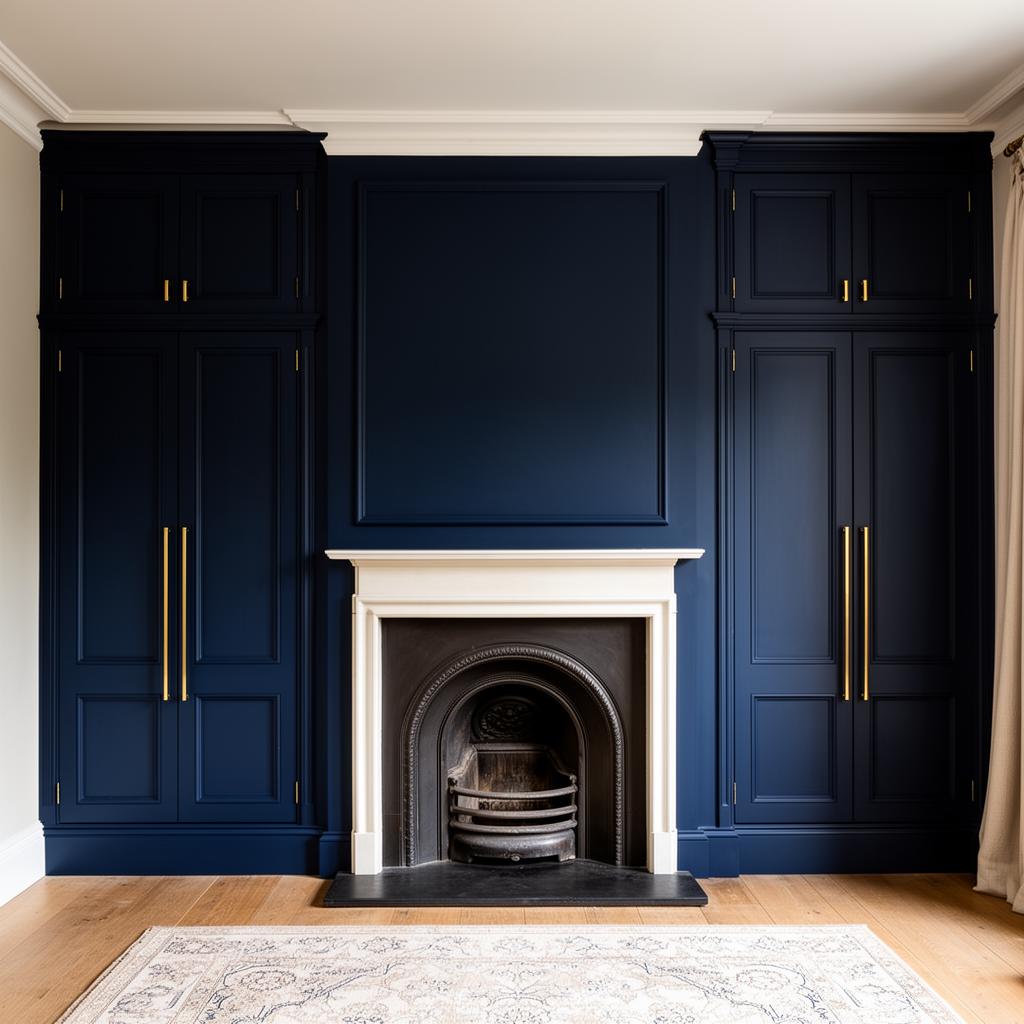
How we build flush to the wall
Every built-in starts with a laser survey that captures the room's true geometry — including the inevitable out-of-square corners, bowed walls and floors that fall away towards the bay. We design around those imperfections rather than fighting them.
On install day, scribing strips on either side and across the top let the joinery sit tight to plaster on all three faces. Skirting either continues across the front of the wardrobe or is mitred neatly into the carcass. Cornicing returns onto the wardrobe so the top reads as ceiling rather than a flat lid.
Period houses
Victorian, Edwardian and 1930s London houses are where built-in joinery looks at its best — picture rails, deep skirting and chimney breasts give the joinery natural lines to follow. We respect those proportions: shaker panel heights echo the picture rail, doors stop at the cornice, and the kick plinth lines up with the existing skirting.
Frequently asked questions
- What's the difference between fitted and built-in?
- In practice we use the terms interchangeably. 'Fitted' emphasises that it's measured to your room; 'built-in' emphasises that it reads as part of the architecture. SAV does both.
- Can built-in wardrobes be removed if I move?
- Yes, but they are designed to stay. If you want furniture you can take with you, freestanding is a better choice.
Ready to start your project?
Book a £150 home survey and we'll measure, sample and quote — fully deductible from your order. Or design your wardrobes online in the configurator first.