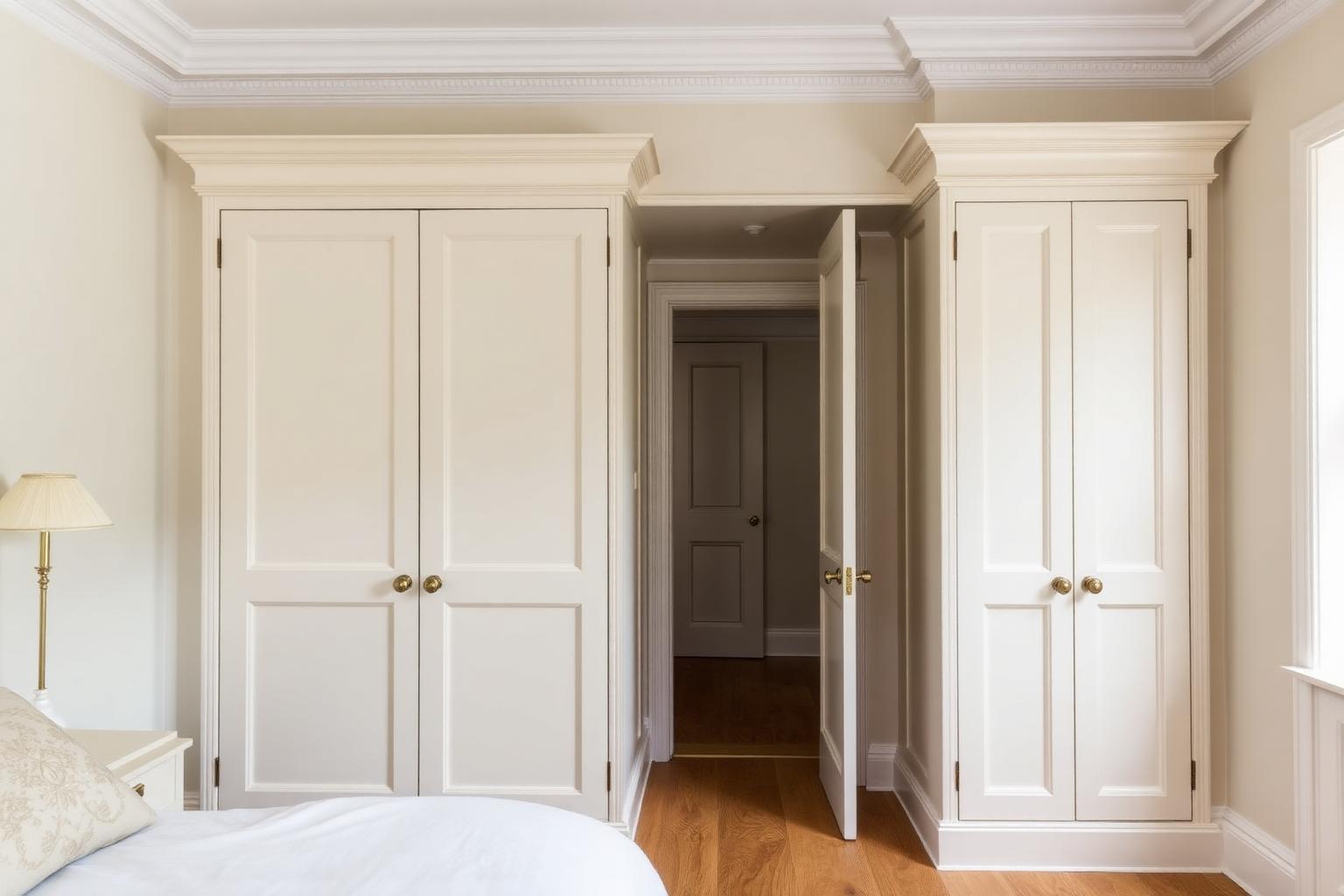
The carcass behind a fitted wardrobe is essentially the same on every job we do — 18mm engineered board, soft-close runners, properly braced. What you see is the door, and that single decision sets the visual tone of the bedroom for the next 25 years. Most of our London clients end up choosing between two broad families: Shaker, and contemporary flat-panel or fluted.
What is a shaker door and why is it so popular?
A Shaker door is a five-piece construction — four rails and stiles framing a flat centre panel — derived from 18th-century Shaker furniture. The visual signature is the simple shadow line where rails meet stiles, with no carving, bead or applied moulding. It's deliberately quiet.
Shaker is popular because it is genuinely versatile. The same door sits happily in a Victorian terrace, an Edwardian semi, a 1930s house or even a modern conversion when paired with the right laminate shades and handle. It's the safe choice in the best sense — flattering to almost every room type, and unlikely to look dated in ten years' time.
Variations worth knowing: five-piece overlay Shaker (door sits on top of the carcass) is the standard; in-frame Shaker (door sits inside a visible face frame) adds an extra shadow line and a more bespoke feel, at roughly 15–25% more cost.
Flat panel and fluted contemporary styles — the modern choice
On the contemporary side, two profiles dominate:
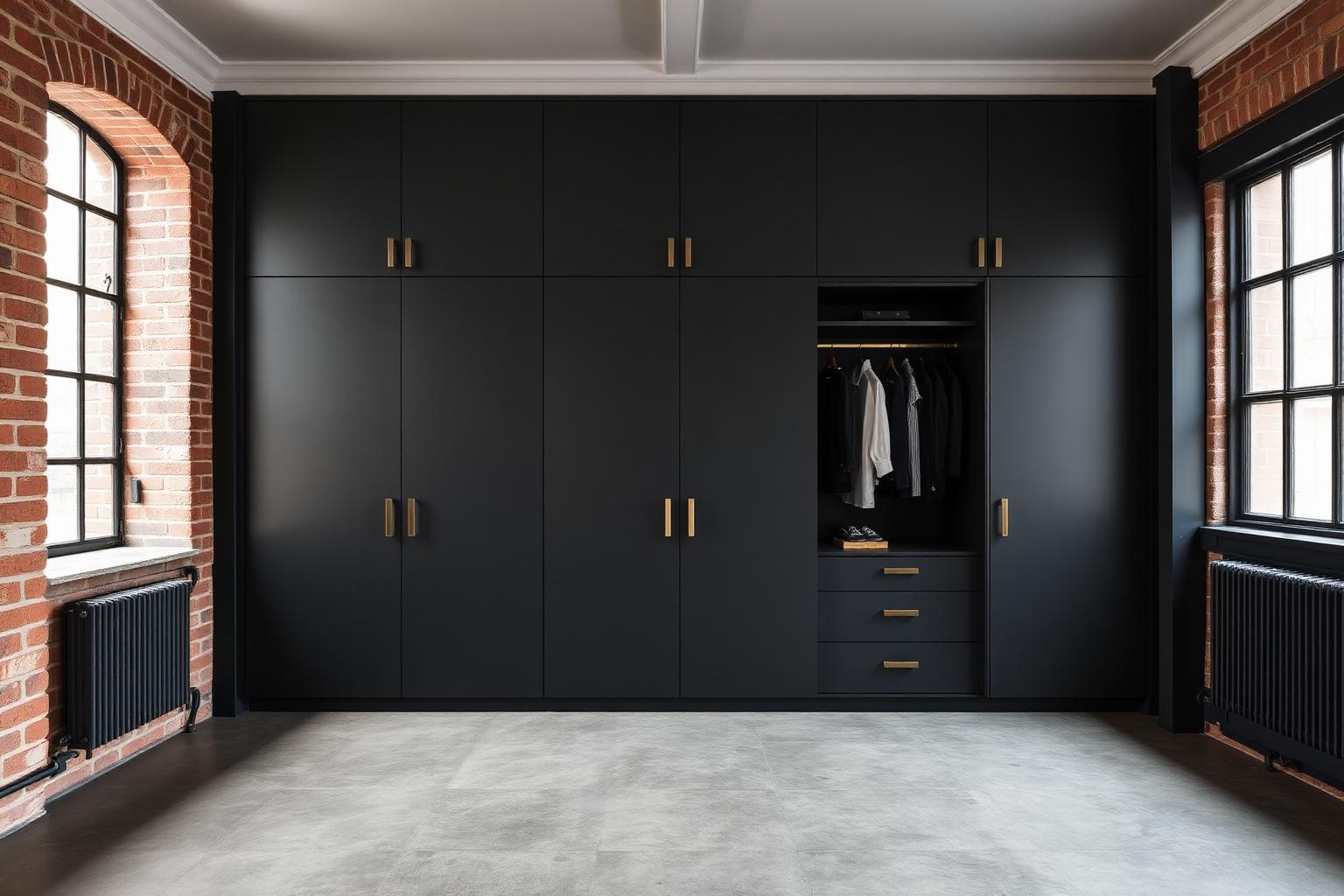
- Flat slab — a completely smooth, unbroken door face. Pairs with either an integrated handle, a slim profile handle, or a fully handleless push-to-open mechanism. Reads as architectural and confident.
- Fluted / reeded — vertical timber or MDF flutes routed into the door face. Adds tactile texture and shadow without the period associations of Shaker.
Flat slabs are unforgiving — a poor spray finish or a slightly out-of-square door will show up immediately under raking light. They have to be properly made. Fluted doors are a little more forgiving and currently extremely popular in master bedrooms; they bring a quality-hotel feel without becoming a 2020s timestamp.
Matching your wardrobe doors to your home's architecture
The door style should respond to the room it lives in, not just the current Pinterest mood.
- Georgian / Victorian / Edwardian (cornices, picture rails, deep skirtings) — Shaker, ideally in-frame, laminate. Avoid handleless slab in these rooms; it tends to fight original detailing.
- 1930s and inter-war semis — Shaker works, but flat slab with a slim handle also sits happily. Either reads as appropriate.
- Warehouse conversions and new-builds — handleless flat slab in a deep matte tone, or fluted doors in a warm timber veneer. Shaker in these rooms often reads as nervous.
- Loft conversions on period properties — flat slab or fluted, often in a soft grey or off-white. The loft is architecturally separate from the rest of the house, so it can take a more modern treatment.
Colour choices that work with each door profile
Shaker doors carry colour beautifully because the framed panel reads each shade slightly differently in shadow. The most-requested palettes in our London workshop right now are heritage greys (Pigeon, Pavilion Gray, Plummett), warm off-whites (Cornforth White, Shaded White, Slipper Satin), muted greens (Card Room Green, Mizzle, Lichen) and deep inky blues (Hague Blue, De Nimes, Inchyra Blue). Avoid stark brilliant whites — they read cold next to original woodwork.
Flat slab and fluted doors are usually best in low-chroma, low-contrast tones — soft greys, taupes, warm whites, deep greens, smoked oak veneers — that emphasise the architectural quality of the form rather than competing with it. Save the bold colour for the walls.
Whichever route you take, ask for laminate-finished sample doors in your shortlisted colours and view them in your own room at different times of day. North-facing London bedrooms in particular shift dramatically between morning and evening, and a laminate shades that sang in the showroom can fall flat at home.
Still undecided?
Book a £150 home survey and we'll bring physical sample doors in both Shaker and contemporary profiles, plus laminate swatches, so you can see them in your own light. The fee is deducted from your order.